


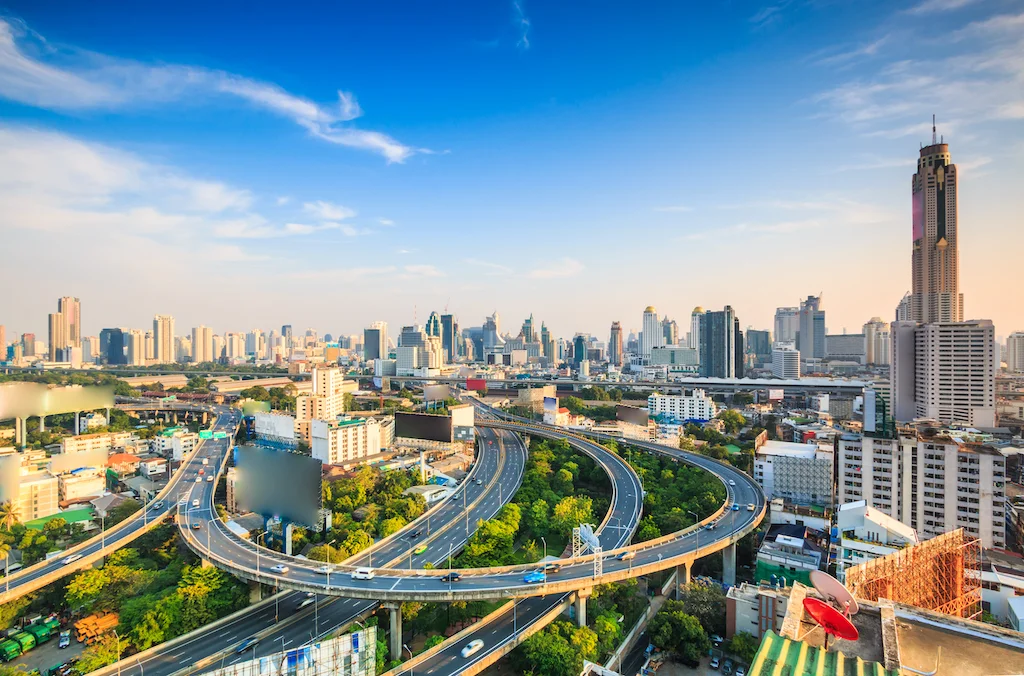
When traveling to Thailand, you might find it necessary to use a vehicle to to get around is common.
Here are some important things to keep in mind. The first thing to consider is an international driver’s license. If you don’t have an international driver’s license, you’ll need to obtain one to drive in Thailand. Furthermore, it is important to strictly adhere to traffic rules and regulations while driving in Thailand.
This includes wearing seat belts and respecting traffic signs to ensure a safe and enjoyable travel experience.
Basic information
- Tourists should carry a valid home-country driver’s license plus an International Driving Permit (IDP) issued in the same country as that license. Rental companies and police often require both; driving with neither can result in fines and insurance problems.
- Cars in Thailand have right-hand steering.
- The country follows left-hand traffic (LHT).
- Drivers and passengers must wear seat belts at all times.
- Motorcycle riders and passengers must wear helmets throughout their journey.
- Speed limits are generally restricted to 80 kilometers per hour, except on expressways (motorways) where it may be limited to 120 kilometers per hour.
- Payment for toll roads can be made in cash or through automatic channels. Check with the rental service provider for specific details.
- Be cautious of high beams and car horns, as they may affect other drivers.
- Driving under the influence of alcohol is punishable by imprisonment of up to 1 year and fines ranging from 5,000 to 20,000 baht or both, with a blood alcohol content of 50 milligrams per deciliter. In case of injuries or fatalities, the penalty increases to 1 to 10 years of imprisonment and fines ranging from 20,000 to 200,000 baht.
- When renting a car, it is recommended to secure comprehensive insurance coverage for the vehicle, driver, and passengers.
- For navigation within Thailand, we recommend using the application. Google Map
Driver's license
Short-term visitors drive on their national license + IDP for the period allowed by immigration (commonly up to the stay granted on entry). The IDP must be obtained before you leave home from your national automobile association—it cannot be issued to tourists at the Department of Land Transport (DLT).
Long-term residents (work, retirement, etc.) must obtain a Thai driving license at DLT after meeting visa and medical requirements. Tourists cannot convert to a Thai license without an eligible long-stay visa.
General requirements to drive in Thailand:
- Minimum age 18 for cars (rental companies may require 21–23).
- Valid license category for the vehicle (car vs motorcycle).
- Helmet required for motorcycle riders and passengers.
Required Document:
- A passport with a valid VISA (temporary or non-immigrant) that is not expired and has been issued not more than 1 year before applying.
- Proof of address in Thailand: This can be a certificate of residence or a local address certificate, which can replace a house registration copy from the embassy or government office.
- A doctor’s certificate stating that you do not have any medical conditions that could be dangerous for driving.
- Two passport-sized photos: These should be front-facing, without wearing a hat or glasses.
** Please verify the necessary documents for applying for a driver’s license with the Department of Land Transport once again.
Renting a car:
When renting a car in Thailand, there are several service providers available to assist you.
Most rental companies have the following requirements:
Renters must be at least 21 years old to be eligible for car rental.
You can choose from popular rental companies such as:
- Budget : Offers a variety of options at economical prices.
- Sixt : Provides premium services and luxury cars.
- Hertz : Offers a wide range of rental options
- Avis : Comprehensive services with various choices.
- Thai Rent A Car : A Thai car rental company with budget-friendly rates.
Please prepare the following documents:
- International Driver’s License
- Driver’s License from your home country
- National ID Card
- Credit or Debit Card
- Some rental providers may also request to see your flight tickets for the round trip.
Gas/EV Charger Station
The majority of cars used in Thailand are still powered by gasoline, so there are generally gas stations available. Although electric vehicles are becoming popular, there are not many electric charging stations yet, but they are sufficient for driving to various regions of Thailand. We recommend that if you choose an electric car, you should plan your trip, especially the electric charging points.
There are several service providers for gas stations, all of which offer quality fuel, and the prices do not differ much. They can be found commonly in cities, outside cities, and in rural areas. Electric vehicle charging stations are also available at gas stations, but they do not cover every area and are often found in major cities or shopping malls.
Gas stations are considered as excellent rest stops because they offer a full range of amenities such as clean bathrooms, convenience stores, restaurants, coffee shops, and car maintenance services.
The price is in Thai Baht per liter. This information was sourced from the Ministry of Energy.
Tollway
The expressway allows payment either in cash or through automatic channels. If you opt for automatic payment, you must install the necessary equipment to link with the expressway. For detailed information, please consult your car rental service provider. The initial expressway fee starts at 25 Baht. Depending on the route, some sections may require payment prior to entry, while others allow payment at the exit point of your desired destination.
Traffic rules
- Respect traffic rules strictly.
- Car drivers and passengers must always fasten their seat belts during the journey.
- Motorcycle riders and passengers must wear helmets at all times while traveling.
- Always carry your driver’s license.
- Do not drive under the influence of alcohol.
- Avoid parking in prohibited areas by observing signs indicating “No Parking on Even/Odd Days” or white-red curbs (which mean no parking at any time) or white-yellow curbs (which allow temporary parking and are often reserved for public transport).
- Give way to pedestrians when driving.
- In Thailand, using communication devices while driving is against the law. If necessary, you can use hands-free devices.
- Adhere to speed limits.
Sources & references
Content reviewed against the sources below on 24 May 2026. Rules, fees, and phone numbers can change—confirm critical details with official agencies before you travel.