


Street food is how many of us eat every day in Thailand—and we want you to enjoy it without worry. As locals, we do not obsess over Michelin stars at a noodle cart; we look for freshness, turnover, and a few simple habits. This guide shares how Thais actually choose stalls so you can eat confidently on sidewalks from Bangkok to Chiang Mai.
The busy stall rule
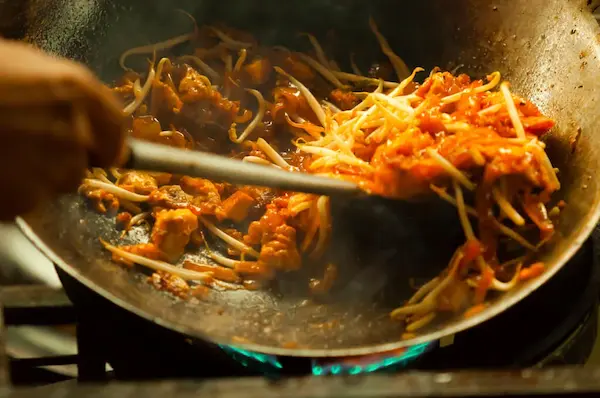
Our number-one tip: eat where Thais are lining up, especially at peak meal times (roughly 11:00–13:00 and 17:00–20:00). High turnover means ingredients are used quickly and cooked fresh. An empty stall at lunch in a busy market is not automatically bad—but a long queue of office workers or students is a strong sign we trust.
- Prefer stalls that cook to order (wok dishes, grilled skewers) over trays of food sitting for hours in the sun.
- Watch the cook: clean hands, separate raw and cooked areas when possible, and food served piping hot.
- Markets like Yaowarat (Chinatown) and Or Tor Kor are famous, but the same rules apply everywhere—follow the crowd, not only the Instagram spot.
Hygiene tips we actually use
- Utensils: Many stalls offer shared spoons at the condiment table. We use them only for the shared jars, not to eat from our bowl—use your own spoon for your plate, or ask for a fresh one.
- Plates and bowls: Briefly rinsing with hot water at the table (common at noodle shops) is normal; it is not rude.
- Shellfish and seafood: Stick to busy seafood stalls and fully cooked dishes if you have a sensitive stomach.
- Salads and raw herbs: Som tam and fresh herbs are staples, but if you are recovering from illness, choose cooked dishes for a day or two.
- Hand gel: Not every stall has a sink; carry alcohol gel and use it before eating, especially after handling cash.
For more on ordering at casual cook-to-order shops, see our guide on how to order at made-to-order restaurants.
Spice: how to survive (and enjoy) it
Thai “medium” spice can be fierce if you are not used to bird’s eye chilies. Say “mai phet” (not spicy) or “phet nit noi” (a little spicy) when you order. Many dishes—especially Isan salads and southern curries—are spicy by default; ask before you commit.
- Keep a cold drink nearby; coconut water and Thai iced tea help more than water alone for some people.
- Rice and cucumber slices calm the burn—locals eat them between bites, not only at the end.
- If your mouth is on fire, dairy (milk, yogurt) works better than beer for many visitors.
Ice and drinks
Visitors often ask about ice. In cities and tourist areas, many vendors use factory-made tube ice (the hollow cylinders)—it is produced with treated water and is what we drink with iced coffee and fresh juices daily. Risk is lower at busy cafés and chain-style drink stalls than at a quiet cart with chipped block ice of unknown origin.
- When in doubt: order “mai sai nam khaeng” (no ice) or buy sealed bottled drinks.
- Fresh juice: Choose stalls that squeeze in front of you and use busy turnover.
- Beer: Drink from the bottle or can if you prefer to skip ice entirely.
When we would skip a stall
- Meat or seafood smells off or has been sitting uncovered in strong sun.
- No customers for a long time at a peak hour in a busy area.
- Flies or pests on uncovered food (we move on—there is always another stall).
- You feel unwell already—street food will still be there tomorrow; rest and hydrate first.
Street food is one of the best parts of visiting Thailand. Use the busy-stall rule, manage spice, and choose ice wisely—and you will eat like us, with far fewer surprises.
Sources & references
Content reviewed against the sources below on 24 May 2026. Rules, fees, and phone numbers can change—confirm critical details with official agencies before you travel.