


Thailand is a fruit lover’s paradise—markets overflow with colors and smells you will not find at home. We buy by season when prices drop and flavor peaks. This guide covers fruits we recommend to foreign friends, when to eat them, and how to open or order without embarrassment (especially durian).
Mango (มะม่วง)
Peak: roughly March–June (Nam Dok Mai and Ok Rong varieties are famous). Green mango appears year-round for salads (som tum).
- Ripe mango: Eat fresh or as mango sticky rice (khao niao mamuang)—sweet Nam Dok Mai is the classic.
- How to choose: Fragrant skin, slight give when ripe; too soft means overripe for eating plain.
- Tip: Vendors often peel and slice for you—eat with hands or small fork at the stall.
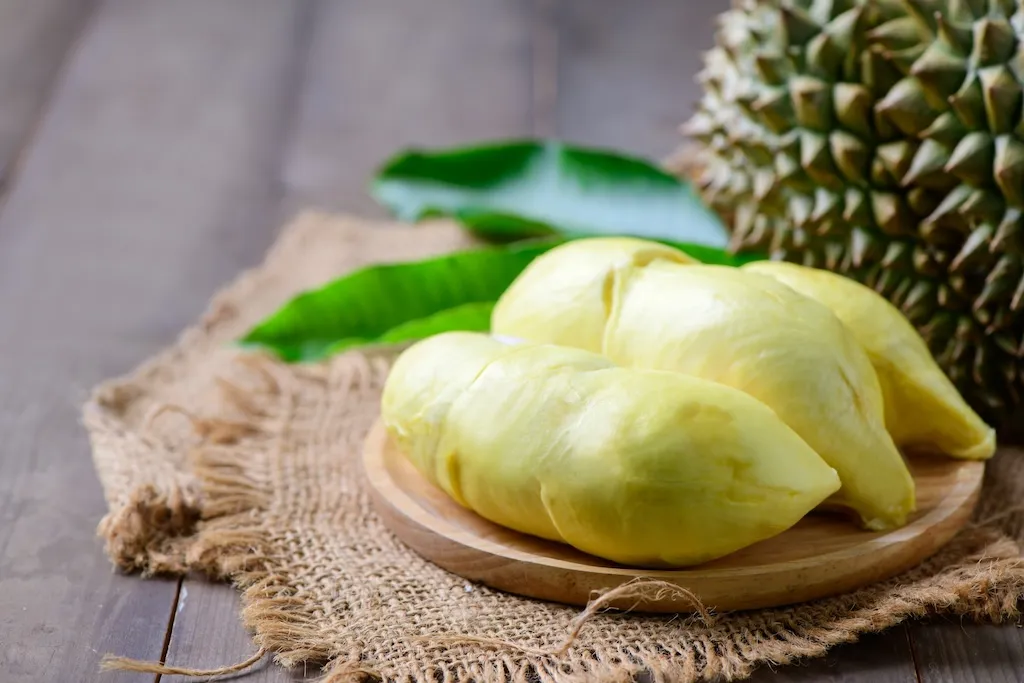
Durian (ทุเรียน)
Peak: roughly May–August (varies by region—eastern provinces like Chanthaburi are famous).
- Taste: Creamy, sweet, pungent—polarizing. Try a small portion before buying a whole fruit.
- How to eat: Buy opened pods from the vendor; use gloves or tissues—smell sticks to hands. Eat with fingers; seeds are large and not edible.
- Etiquette: Many hotels, malls, and Skytrain signs ban durian indoors—the smell travels. Eat outdoors or in designated areas.
- Varieties: Monthong (milder, popular), Chanee, Kanyao—ask the seller for “mild” if you are new.
Mangosteen (มังคุด)
Peak: often overlaps durian season—May–September is a good window. Thais pair mangosteen with durian (cooling vs heating in folk belief).
- How to open: Press gently around the middle or cut shallowly with a knife; twist halves apart. White segments inside; larger segments may have seeds.
- How to choose: Deep purple shell, green cap fresh—not dry brown. Heavy for size means juicy.
More fruits to try
- Longan (ลำไย): Sweet, grape-like; peel thin brown skin. Peak around summer.
- Lychee (ลิ้นจี่): Floral sweetness; brief season often May–June.
- Rambutan (เงาะ): Hairy red shell; mild and juicy—easy starter fruit.
- Dragon fruit (แก้วมังกร): Mild flavor; white or magenta flesh—year-round, very photogenic.
- Pomelo (ส้มโอ): Large citrus; segments in thick pith—sweet varieties in winter months.
- Jackfruit (ขนุน): Sweet yellow pods when ripe; also used unripe in curries. Sticky latex—let vendors cut it.
- Pineapple (สับปะรด): Especially good in the east (e.g. Paet Riu); vendors slice with a spear—dip in chili-salt if offered.
Where and when to buy
- Or Tor Kor (Bangkok) and provincial morning markets offer the best quality when in season.
- Roadside carts are fine for a quick snack—buy what looks busy and fresh.
- Pre-cut cups are convenient; eat same day—ice keeps them cold but check freshness in heat.
- Export-grade durian is expensive; local market prices drop in peak month—ask “thao rai kilo?” (how much per kilo?).
For dishes using mango and coconut, see food you can't miss.
Sources & references
Content reviewed against the sources below on 24 May 2026. Rules, fees, and phone numbers can change—confirm critical details with official agencies before you travel.